Image by Sebastiaan Stam from Pexels
The spotlight isn’t where you need to shine
Bianca was shopping at her local mall while messaging her friends, “Where are you?!” With her neon pink high heels clicking, she was impatient to shoot her next TikTok reel. While adjusting her eyeliner in a makeup booth, her friends finally arrived, powdered with glam girl makeup on and ready to dance their bottoms off to the camera.
After posting her reel, Bianca called her mom, “We just shot the reel! Oh my god, it already has half a million views!” Her mom replies, “That’s amazing! Your performance is at least twice the amount as last month, we might be able to get on Harper’s show at this rate.”
Bianca gives a slight twitch to her eye, remembering that documentary called Bad Influence: The Dark Side of Kidfluencing, before sighing and reading her comments:
“What a baddy!”
“What’s her onlyfa**?”

Image by khezez | خزاز from Pexels
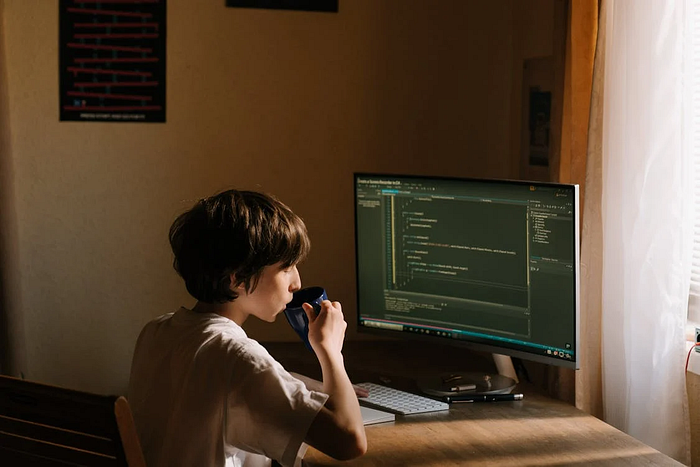
Image by cottonbro studio from Pexels
Tom walked through the door of his apartment, with a Gateway computer in hand, he grabbed a beer, chugging it, before plopping down on his leather chair to open his computer. The bright, white monospace typeface greeted him, asking for his password in its dark abyss. Typing quickly, he intuitively navigated to Ars Technica. Searching through questions from users in its clanky, trying-to-be-cool looking orange and black branding, with a modern-appearing sans-serif typeface differentiating from its code-themed topics (hint: code is written in monospace, not sans-serif usually), multiple threads read back to Tom as he grinned and started typing away.
What Tom didn’t know about sites like this, is how users like him who were used to giving detailed replies when helping fellow coders, would gradually grow accustomed to shorter responses, comments that didn’t quite feel human, and would feel impatient if not scrolling through TikTok at least once that hour.
Whether it’s teens who don’t know what it means to find focus when reading online, or even baby boomers who get itchy fingers when scrolling (those who embraced Facebook, I mean), there are still users who remember the old days and stick to their guns to draw out their responses in clear detail without becoming impatient — they’re Redditors. OK and probably a few other platforms hit this mark, but in particular Reddit, until now.
With AI bots feeding replies across seemingly all subreddits, it’s almost impossible now to tell who’s who. Why is this important? Because even long-time Redditors have left the platform feeling like there’s no human connection anymore. Not just this, but the advertising coming from AI users making long-winded stories is just frustrating, leading people to make rude comments to anyone — just because they don’t know who’s human anymore. In fact, using the internet itself has already been causing hate speech since we don’t actually see users on the other side of the screen, and AI responses have made this much worse.
Yet, there is hope. As long as people are free to own domains, there are numerous forums that help users make real connections. How? Because they aren’t funded by Facebook, Bytedance, and the whatnot, they don’t prioritize profit over real engagement. There’s plenty of examples I can bring up, but what people need to do to get savvy on the internet is to find them themselves. Personally, BlenderArtists is my favorite as a 3D Designer, since it’s run by a long-time Blender user who features anyone’s 3D model for that week and shows job postings from several lesser-known sites.
What about those users from Ars Technica, have they adapted? My guess is that they’re armed with Thinkpads, Linux-driven PC’s, or maybe stayed Windows XP users who revel for the “old days” when they made friendships with humans and collaborated on sh*tty projects just for fun.
They’re called the underdogs, those who find work in lesser known avenues that social media stars won’t talk about because it’s not as aesthetic as filming cute dances in front of corn-addicted users, and because it isn’t easy, either.
These users love depth, the ability to enter a rabbithole of information with the attention span of a groundhog; caught up for hours at a time. After all, as Cal Newport says in “So Good They Can’t Ignore You,”
“He simply understood the value, and difficulty, of becoming good… Giving people more control over what they do and how they do it increases their happiness, engagement, and sense of fulfillment.”
In conclusion,
the underdogs of the internet don’t use social media as most would want them to, and even though they’re expected to lose when it comes to earning, they come out victorious by prioritizing depth over external clout.
X post that inspired this story
Being an underdog is the only way to survive online.
-
Ignored DMs
-
Brainrot content
-
AI bots everywhere
Are only on the most visible platforms. But not on the underdog sites. No, I’m not talking about the darkweb. I’m talking about:
-
Forums
-
Small communities
-
Reaching out in ur neighborhood (gasp 😱)
And there’s probably plenty more.
Social media makes the extrovert ideal trendy that everything we do has to be seen.